Thinking of becoming a pilot in the U.S.? There’s a ton of information out there—from YouTube channels to flight school handouts—but nothing beats the official materials from the FAA. Whether you're just starting your flight training or getting ready for a checkride, these resources are essential. In this post, I’ll walk you through the key FAA handbooks, regulations, and charts that every student pilot should know.
1. FAR/AIM
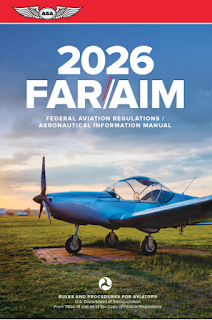
The FAR/AIM is a combined publication that includes the Federal Aviation Regulations (FAR) and the Aeronautical Information Manual (AIM). It’s one of the most important references for pilots in the U.S.
Federal Aviation Regulation (FAR)
The FAR outlines the official rules and legal standards that govern aviation in the U.S. These are the regulations every pilot—regardless of experience level—must follow. If you're currently in flight training, you'll find yourself referring to the FAR quite often.
FARs are based on the Code of Federal Regulations (CFR), specifically Title 14. They’re revised every year (Annual), so staying current is essential.
Title and Part of the regulations
1. Title 14 Aeronautics and Space
Most FAA aviation regulations are found in Title 14 of the Code of Federal Regulations, commonly referred to as 14 CFR. Title 14 is divided into many parts, each covering different areas of aviation.. However, flight schools in the U.S. generally operate under Part 91 of the Federal Aviation Regulations. That means student pilots don’t need to study every part of the regulation—just the ones relevant to their training.
Here are the most commonly referenced parts for student pilots:
How to find it?
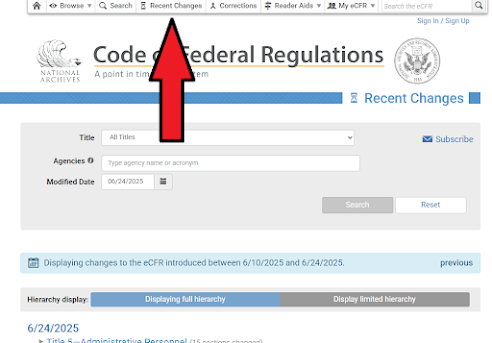
How can you check revised contents?
- Title 14 :: Aeronautics and Space → Click Search
2. FAR/AIM book
- You can find it on the first chapter of the book.
Aeronautical Information Manual (AIM)
The Aeronautical Information Manual (AIM) is the official guide to basic flight information and air traffic control (ATC) procedures for the aviation community operating in the U.S. National Airspace System (NAS). It is revised every six months [IFH 2-4, AIM introduction].
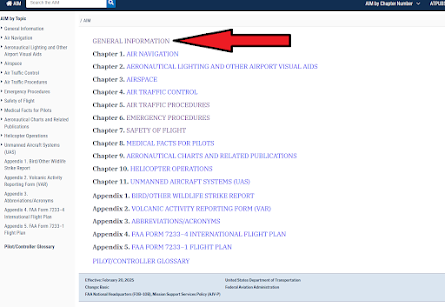
How to find it?
1. FAA website
2. FAR/AIM book
3. FAR/AIM App
How can you check revised contents?
2. Handbook
FAA Handbooks are developed to provide specific information about a particular topic that enhances training or understanding.
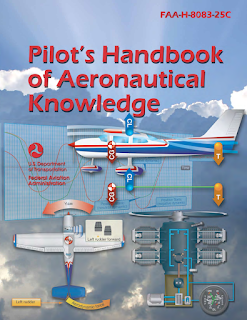
Pilot's Handbook of Aeronautical Knowledge (FAA-8083-25)
This handbook provides the basic knowledge that is essential for pilots. It introduces pilots to the broad spectrum of knowledge that will be needed as they progress in their pilot training. [PHAK preface]
Airplane Flying Handbook (FAA-H-8083-3C)
The Airplane Flying Handbook provides basic pilot skills and knowledge that are essential for piloting airplanes. This handbook is developed to assist student pilots learning to fly airplanes. [AFH preface]
Instrument Flying Handbook (FAA-H-8083-15)
Instrument Flying Handbook is designed for use by instrument flight instructors and pilots preparing for instrument rating tests. There are different ways of teaching, as well as performing, flight procedures and maneuvers and many variations in the explanations of aerodynamic theories and principles. All of the aeronautical knowledge and skills required to operate in instrument meteorological conditions (IMC) are detailed [IFH preface]
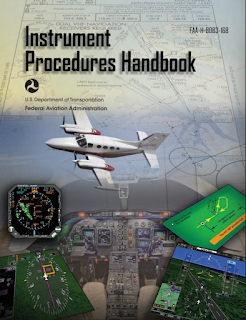
Instrument Procedure Handbook (FAA-H-8083-16)
It is designed as a technical reference for all pilots who operate under instrument flight rules (IFR) in the National Airspace System (NAS). It also provides detailed coverage of instrument charts and procedures including IFR takeoff, departure, en-route, arrival, approach, and landing. [IPH Preface]
Aviation weather handbook(FAA-H-8083-28)
This handbook consolidates the weather information from advisory circulars (AC) into one source document. It explains the most commonly used weather products and information.
- AC 00-6, Aviation Weather.
- AC 00-24, Thunderstorms.
- AC 00-30, Clear Air Turbulence Avoidance.
- AC 00-45, Aviation Weather Services.
- AC 00-54, Pilot Windshear Guide.
- AC 00-57, Hazardous Mountain Winds.
📘AWH Preface
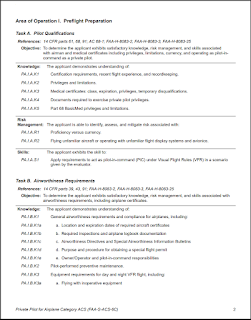
3. Practical Test Standard (PTS) / Airman Certification Standard (ACS)
PTS is for FAA pilot certificates test and associated ratings. ACS is enhanced version of the PTS. ACS adds task specific knowledge and risk management elements to each PTS Area of Operation and Task. These standards outline what student pilots must train and test for to obtain each certification. [PHAK 1-22]
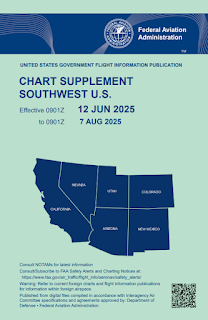
4. Chart Supplement
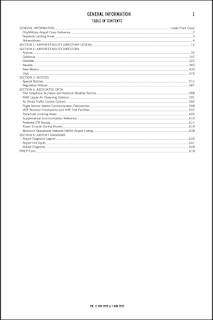
Chart supplement (A/FD) is a civil flight information publication updated every eight weeks (56 days) [Chart supplement General information].
What's included in the chart supplement
- Detail information of each airport
- Airport diagram
- Information of the airspace
- Navigation facilities
IFR related
The A/FD contains information on airports, communications, and navigation aids (NAVAIDs) pertinent to IFR flight.
- VOR receiver checkpoints
- Flight Service Station (FSS) Communication Frequencies
- Weather service telephone numbers
- ARTCC frequencies
- LAHSO
- High and Low altitude preferred routes
📘 IFH 10-2
5. Aeronautical chart
An aeronautical chart is the road map for a pilot flying under VFR. The chart provides information that allows pilots to track their position and provides available information that enhances safety.
The three aeronautical charts used by VFR pilots are:
- Sectional
- VFR Terminal Area
- World Aeronautical
Sectional chart
Sectional charts are the most common charts used by pilots. The charts have a scale of 1:500,000 (1 inch = 6.86 nautical miles (NM) or approximately 8 statute miles (SM)).
VFR Terminal Area Charts
VFR terminal area charts are helpful when flying in or near Class B airspace. They have a scale of 1:250,000 (1 inch = 3.43 NM or approximately 4 SM)
World Aeronautical Charts
World aeronautical charts cover land areas of the world, at a size and scale convenient for navigation by moderate speed aircraft. They have a scale of 1:1,000,000 (1 inch = 13.7 NM or approximately 16 SM).
📘PHAK 10-2 to 10-3
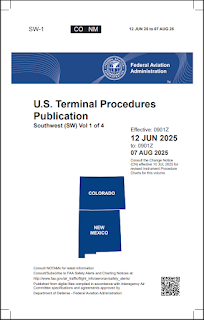
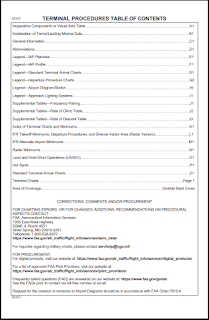
6. Terminal procedure publication (TPP)
TPP is the information of Standard Instrument Departures/Terminal Arrivals/Standard Instrument Approach Procedure Charts. TPP enables pilots to guide their aircraft in the airport. It is revised every 56 days (digital 28 days). [TPP supplemental 2 page]
*If the information changes within 56 days, FDC NOTAM shows changed information
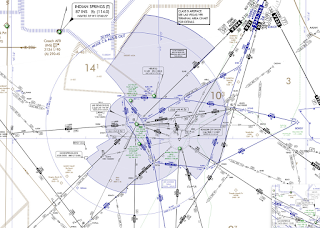
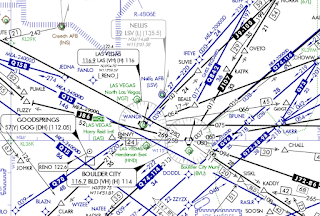
7. En Route Charts
IFR Enroute chart is the information showing the IFR airways and information to improve the ability to fly instruments safely and competently. It is divided to Enroute Low & High altitude, IFR area chart. The en-route charts are revised every 56 days.
Enroute Low chart
The IFR low altitude enroute chart is the instrument equivalent of the sectional chart. Below 18,000 feet MSL is IFR low chart (Outside of A airspace).
Enroute High chart
En route high-altitude charts provide aeronautical information for En-route instrument navigation at or above 18,000 feet MSL.
IFR area chart
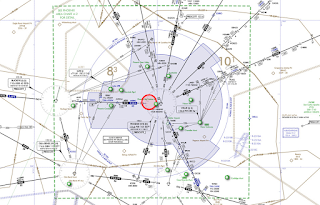
Part of the low-altitude en-route chart series, this chart furnishes terminal data at a larger scale for congested areas [IFH G-2]. IFR area chart is similar to TAC (Terminal area chart). Dashed green area is IFR area chart in the digital version.
8. Aeronautical chart user guide
Chart Users' Guide is an introduction to the Federal Aviation Administration's (FAA) aeronautical charts and publications. Chart Users' Guide is updated when there is new chart symbology or when there are changes in the depiction of information and/or symbols on the charts. It will be published in accordance with the 56-day AIRAC schedule.
9. Advisory circular
An AC is an informational document that the FAA wants to distribute to the aviation community. They are to be used for information only and are not regulations. The FAA website provides a database that is a searchable repository of all aviation safety ACs. Current and historical ACs are provided on the FAA website
📘PHAK 1-10
The FAA's official documents—like the FAR/AIM, AIM, and various handbooks—are essential tools for any student pilot. They not only help you pass your tests, but also build the foundation for safe and confident flying.
Make it a habit to check for updates regularly, and don’t be afraid to revisit these materials throughout your training.
Have questions about any of these FAA documents or want me to cover one in more detail? Leave a comment below—I’d love to hear from you!